The recent Zimmer Durom Cup issues were first noticed by prominent orthopedic surgeon, Dr. Larry Dorr, in 2007. He identified a high rate of problems with the Zimmer Durom Cup, where his patients were experiencing excruciating pain after their hip replacement which was being caused by the artificial hip socket separating from the bone, instead of fusing with it. After his concerns were dismissed by Zimmer, he published an open letter to his colleges in April 2008, which eventually led Zimmer to investigate the Durom Cup problems. While Zimmer’s own estimates in 2008 suggested that some doctors in the United States experienced failure rates as high as 5.7%, more recent claims made in Zimmer Hip lawsuits suggest that the artificial hip failure rate is between 20% and 30%.
More than 200,000 potentially defective Zimmer NexGen knee replacement components may have been used throughout the United States, which could have caused thousands of people to experience problems or require additional Zimmer knee revision surgery due to early failure of their knee replacement. In September 2010, several Zimmer NexGen knee recalls were issued for different components used in their knee replacement systems due to design or manufacturing problems. Certain Zimmer NexGen MIS components were recalled due to a high number of reports of problems associated with the devices. In addition, certain Zimmer NexGen LPS knee components were recalled due to inconsistent geometry and non-conforming designs.
What is considered to be modern hip replacement surgery has been in effect since the 70′s, which is why the idea may seem so commonplace. A hip replacement, such as those from Zimmer Durom, most commonly consists of three manufactured pieces, engineered to replace and duplicate the operation of a joint. They include a metal replacement for part of the femur. There is also a component which facilitates natural movement that simulates a natural joint, lastly is the bone cement and / or screws that hold it all together. Thousands of individuals are entitled to compensation for their suffering. Victims of Zimmer hip failure are highly advised to contact an experienced Zimmer hip lawyer as soon as possible.
Showing posts with label zimmer hip replacement complications. Show all posts
Showing posts with label zimmer hip replacement complications. Show all posts
Friday, June 15, 2012
Tuesday, February 7, 2012
Zimmer Hip Plaintiffs Seek Damages, Settlements for Side Effects
 A Texas resident has joined the ongoing litigation against Zimmer Orthopedics after a number of patients of certain hip devices discovered significant complications associated with the products. Jeffrey Johnson has filed a lawsuit with the help of a Zimmer hip lawyer, introducing his case to litigation on January 9, 2012 in the United States District Court for the Eastern District of Texas.
Johnson underwent initial hip replacement surgery in 2008. The device which was implanted was the Zimmer Trilogy Acetabular Hip System, including a Zimmer Trilogy Shell and Liner.
Monday, January 16, 2012
Faulty Zimmer Hip Implant Goes to Court

On October 20, 2011, Tina Muetz filed a lawsuit
against Zimmer Inc., alleging that the company's Trilogy Acetabular Hip System
had failed. Muetz's case, which will be tried in the U.S. District Court of Minnesota,
comes on the heels of similar lawsuits involving a different Zimmer product –
the Metasul Durom Cup, which went through it's own Zimmer hip recall.

Friday, January 13, 2012
Canadian Judge Approves Class Action Zimmer Hip Implant Lawsuit
 Canadian hip implant
patients who have suffered side effects or complications from use of the Zimmer
Durom Cup acetabular device are eligible to join a class action lawsuit against
the company, Justice Gregory Bowden has ruled. So far, 35 Canadians have
reported problems with the device, but the lawyer responsible for the Zimmer
hip class action lawsuit says that ultimately up to 100 Canadians are expected
to join the suit.
Canadian hip implant
patients who have suffered side effects or complications from use of the Zimmer
Durom Cup acetabular device are eligible to join a class action lawsuit against
the company, Justice Gregory Bowden has ruled. So far, 35 Canadians have
reported problems with the device, but the lawyer responsible for the Zimmer
hip class action lawsuit says that ultimately up to 100 Canadians are expected
to join the suit.
The Zimmer hip class action lawsuit is welcome news to the patients who have required hip revision surgery
or have experienced joint pain, immobility, stiffness, inflammation, and/or
diminished range of motion as a result of using the Zimmer Durom Cup.
Initial Zimmer Hip Lawsuits
Monday, January 9, 2012
Zimmer Hip Defects Lead to More and More Lawsuits

A Zimmer hip lawsuit has been filed by Jocelyn Quinn of Louisiana, alleging that she has undergone severe pain and disfigurement due to the failing device. Her case has been transferred into the Zimmer hip multidistrict litigation (MDL) currently being carried out in the U.S. District Court for the District of New Jersey. As many as half a million Americans may have the all-metal hip implants, and a sizeable percentage of them are likely to file a lawsuit after their implants fail. The Zimmer Durom Cup was first introduced in the United States in 2006, as a more advanced form of an artificial hip. The hip resurfacing system is designed out of a single piece of material and is supposed to avoid problems associated with traditional hip replacement components, such as instability, limited range of motion and wear of the bearing.
In February 2011, the Food and Drug Administration stated that there are "unique risks" for "metal-on-metal" artificial hips because tiny metal ions can wear off and damage nearby tissue. Patients who have received all metal implants should be aware of potential symptoms which may occur after surgery and indicate that their device is not functioning properly. Over the past two years, concerns have increased about a risk metal hip replacement complications, resulting in use of the implants dropping to just 5% of the artificial hip market. While Zimmer’s own estimates in 2008 suggested that some doctors have experienced failure rates as high as 5.7%, more recent claims suggest that the Durom Cup failure rate is between 20% and 30%.
A temporary Zimmer Durom Cup recall was issued in July 2008, so that revisions could be made to the product’s warnings and instructions to ensure that doctors were properly trained on the surgical techniques needed to implant the artificial hip correctly. According to Quinn’s Zimmer hip lawyer, she never would have had the device installed had she been made aware of the defectiveness of the product. In a statement released on their website, Zimmer stated that a thorough check of the Durom Cup, including evaluation of the manufacturing processes, design specifications and product documentation, failed to reveal any evidence of a defect in the artificial hip part.
Thursday, January 5, 2012
Consolidation of Zimmer Knee Lawsuits, Leads Many to Hope For Settlements

The U.S. Judicial Panel on Multidistrict Litigation (JPML)
has ordered that all personal injury lawsuits involving Zimmer NexGen knee
implant components currently pending in federal courts throughout the U.S. be
consolidated in a multidistrict litigation and transferred to U.S. District
Court for the Northern District of Illinois. The
multidistrict litigation process, more commonly referred to as the Zimmer
NexGen MDL, is often confused with a class action lawsuit against Zimmer. While
the MDL and a Zimmer NexGen knee class action lawsuit have many similarities
during pretrial proceedings, each claim remains an individual lawsuit, where
the plaintiff must establish that their injuries were caused by Zimmer knee problems and each claim will be decided individually be a jury.
Zimmer Argues Health Risks Of NexGen Components
Zimmer Hip Replacement Problems Spark Complaints

Zimmer Hip
Replacement Shows High Rate of Failure
Zimmer hip replacement problems went public in 2008,
when Dr. Larry Dorr reported that the Metasul Durom cup had a high Zimmer hip failure and
replacement rate. Dr. Dorr, who has conducted thousands of hip replacement
surgeries, revealed that more than 8% of his hip replacement patients
required Zimmer hip revision surgery to remove the device, many within two years of implantation. As of
July 2008, 12,000 people in the United State had already received Durom Cup hip
replacements. If Dr. Dorr's statistics hold true, almost 1,000 would require
removal and replacement.
Tuesday, January 3, 2012
Zimmer Knee Problems Result of Faulty Device

It is estimated that approximately 130,000 patients receive knee replacements each year to treat deterioration caused by arthritis, osteoarthritis and other causes. Zimmer Holdings, a world leader in knee replacement devices, manufactures the NexGen CR-Flex device, which has been marketed as the knee replacement of the future. Featuring a unique, cementless design, the model was designed to give patients a much wider range of motion compared to other knee replacement devices.
However, the NexGen CR-Flex has received serious criticism due to reports of faulty craftsmanship and a partial product recall in September 2010. The recall was based on the device presenting a "nonconforming and inconsistent geometry." The model is reported to fail by loosening at the femur joint, in effect reducing a patient's range of movement and causing significant pain. Affected patients must undergo additional procedures, including premature Zimmer revision surgery, to correct the problem.
In Chicago, a multi-district litigation (MDL) has formed to protect patients who have fallen victim to Zimmer knee problems. At the time of its formation, the MDL consisted of 73 plaintiffs and was slated for the U.S. District Court in Chicago's Northern District of Illinois. Since the first filing, many more plaintiffs have joined – and still more are expected to come onboard. The MDL will help streamline the pre-trial process, making Zimmer lawsuits more efficient and hopefully producing quick results.
Thursday, September 22, 2011
Are Zimmer Hip Lawsuits Linked to 510(k) Overhaul?

After a slew of Zimmer hip replacement lawsuits regarding the Zimmer Durom Cup, the Food and Drug Administration has requested that a study be
conducted on the effectiveness of the current 510(k) medical device approval
process that is in place. This process allows devices, such as joint
replacement systems like the Durom Cup, that are similar to medical devices
already on the market to be approved more quickly because of their similarities
to the pre-existing devices.
Based on
the number of patients who have had complaints about serious problems and
complications associated with their medical devices – many a Zimmer hip lawyer has filed lawsuits against Zimmer and other makers of orthopedic and joint replacement
devices after experiencing more severe hip complications, some of which
necessitated Zimmer hip revision surgery – it appears as though this expedited approval
process for some medical devices is not appropriate or safe for consumers.
Monday, September 19, 2011
Harris Hip Score Used To Evaluate Zimmer Hip Problems
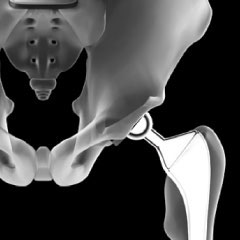
Although the Harris hip score frequently is used to assess the outcome of total hip replacement, only a few minor validity tests have been presented. The aim of this study was to perform a validity test of the Harris hip score and to test its reliability. The Harris hip score can be used by a physician or a physiotherapist to study the clinical outcome of hip replacement. Most validity tests show the Harris Hip Score to be a good indicator of a successful hip replacement, but not everyone responds to issues with their hip replacements the same way. Those who are rated between “fair” and “poor” according to their score, may be entitled to and wish to seek damages due to a defective Zimmer hip replacement.
In April 2008, prominent Los Angeles orthopedic surgeon, Dr. Larry Dorr, notified members of the American Association of Hip and Knee Surgeons about the Zimmer Durom Cup problems he was encountering with patients who received the component. In July 2008, the manufacturer decided to suspend U.S. sales of the product, but a Zimmer Durom Cup recall was not issued since they did not uncover evidence of any manufacturing defect or design defect. Over 12,000 people in the United States have had a Zimmer Durom Cup implanted during their hip replacement surgery. Hundreds of these people could experience loosening of the component and the need for additional surgeries
Wednesday, July 20, 2011
Zimmer Hip Places Blame Everywhere But On Themselves

Tuesday, July 12, 2011
Doctors Point Fingers at Zimmer in Hip Replacement Lawsuits

Monday, July 11, 2011
Zimmer Hip Replacement Lawsuits: A Small Consolation?

Thursday, July 7, 2011
Zimmer Durom Cup Trials Move Forward in MDL

Wednesday, June 29, 2011
Zimmer Hip Lawyers Could Help Plaintiffs Net Thousands

Thursday, June 16, 2011
FDA Investigates Metal Poisoning from Zimmer Hip Replacements
Tuesday, June 14, 2011
Zimmer Hip Lawsuit Settlements On the Horizon
 As a result of the ongoing Zimmer hip lawsuits filed by patients who have experienced side effects as a result of Zimmer hip replacement systems, several settlements have been given out, amounts that could help compensate for costs associated with the hip replacement complications. Medical bills, lost wages, and other expenses will be considered when a settlement is given out.
After a series of lawsuits aimed at the orthopedics manufacturing giant Zimmer surfaced over their metal-on-metal hip replacement systems, Zimmer set aside an amount of $47.5 million in order to cover settlements and jury verdicts surrounding the case. Recently this amount has grown to nearly $145 million, proving that Zimmer is prepared to hand out a significant number of settlements.
Zimmer Places Blame On Doctors for Hip Failures
 Since August 19, 2008, Zimmer has been offering web-based training to surgeons to highlight important aspects of the Durom Cup design, pre-operative planning that is necessary and detailed instructions on special surgical techniques that are required. They have indicated that they will start making the Zimmer Durom Hip Cup available to doctors after they complete the internet training. Zimmer allowed approximately 12,000 people in the United States to receive their Durom Cup, even though they knew or should have known that doctors were not provided with adequate warnings and instructions about the surgical techniques required to avoid failure of the hip replacement parts. According to Zimmer’s own estimates, some doctors experienced Zimmer hip implant failure rates as high as 5.7% with the Durom Cup.
Monday, June 13, 2011
Zimmer Hip Failures May Also Be Causing Metal Poisoning

Friday, June 10, 2011
Zimmer Hip Failure Affects Thousands

Subscribe to:
Posts (Atom)